The Twelve Days of Lincoln

February 7

Lincoln’s famous Letter to Mrs. Bixby after the mother lost five sons during the Civil War.

Five Important Take-Aways from Lincoln’s Letter to Mrs. Bixby

I remember first reading the Bixby Letter as a child in a collection my mother kept in our home entitled “101 Famous Poems.” I did not realize how well-known this collection of poems was, but looking back I think this anthology was important in my development as one who appreciates history, art, poetry, and literature. I remember reading works by Longellow, Whitman, Sandburg, and Seeger in addition to this letter penned by our 16th President.

Even at a young age I was struck by Lincoln’s ability to synthesize so many feelings into such a short letter. Read it a few more times and contemplate some of the reasons for which this letter has become so famous. While I’m sure literary experts have much better ways for determining its greatness than I do, here are my five takeaways for why this is such a masterpiece:

  1. Vocabulary – One of the reasons we marvel at the vocabulary Lincoln utilized is because he had such a brief formal education. The higher use of the language to convey such deep and sincere emotions is simply amazing.
  2. Humility – Though the letter was actually written by the most powerful man in the county at the time, it in no way reflects any qualities which would make any reader think it was written to glorify or serve our President in any way.
  3. Leadership – While Lincoln’s choice of words and style reflect his humble position as a human being, it also assures the reader that Lincoln understood his role in the war and the importance of not simply being perceived as “humble” by Mrs. Bixby, but as the leader of the United States.
  4. Brevity – Lincoln’s letter, like his Gettysburg Address, was short. Lincoln packed more feeling and sympathy into 131 words than most people could express in 131 pages. Lincoln was truly a gifted communicator and this gift was an important tool to be used to wage and end the worst of all American wars.
  5. Genuine – Most importantly Lincoln’s Letter to Mrs. Bixby is geninuely heartfelt and expresses his deep sympathy to a mother who had lost five sons. As Lincoln had lost two sons of his own by this point, he knew of the grief and loss like few other presidents had known before or since.
The Twelve Days of Lincoln

February 5

Overcoming

If ever a great leader had reason for mental illness it would have been Lincoln. Any child who experiences the trauma of the loss of a parent at a young age is bound to have difficulty in coping with loss. Lincoln was fortunate when after his mother Nancy’s death, his father rekindled a relationship with Sarah Bush Johnston. She soon became not only his step-mother, but also his best friend. Lincoln’s difficulites were not so much the result of losing his mother, but the difficult relationship he had with his father Thomas who insisted Lincoln work rather than get an education during his teenage and young adult years.

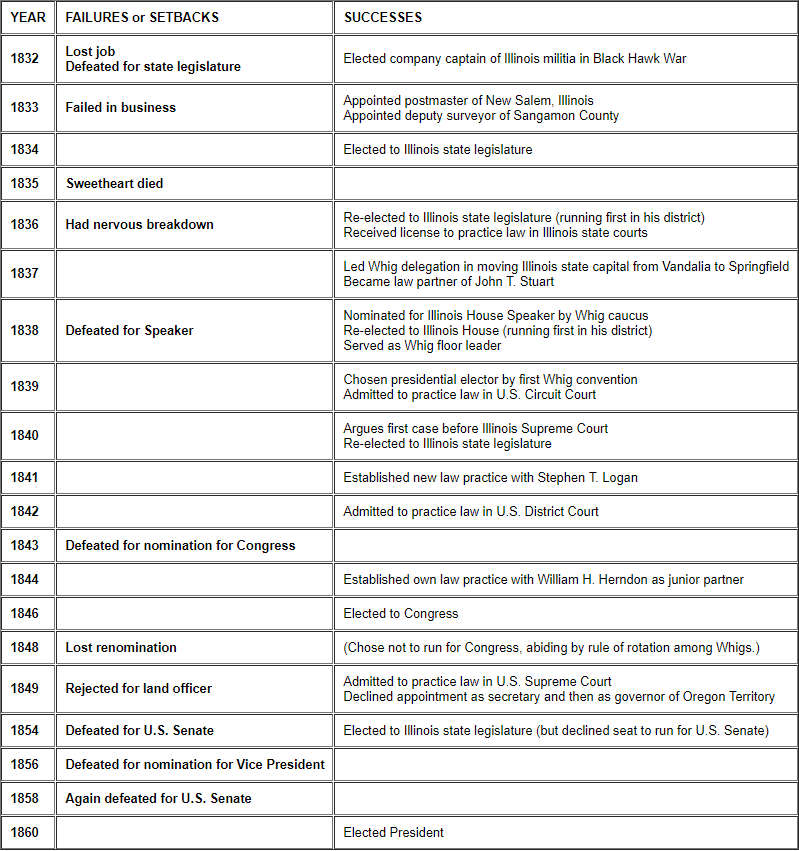
Grief, loss, marital difficulties, the death of children all added to Lincoln’s “Melancholy.” What is important for us to know isn’t the fact that Lincoln struggled with Depression as more than 1 in 5 Americans do today. What’s important to learn from Lincoln is the fact that he used his depression to motivate him. Though it is “mental illness”, this illness was his obstacle, his challenge, and it was this difficulty that fueled his desire to overcome.

Whether Lincoln’s approach to dealing with setbacks was fueled by his understanding of the classics, or whether he stumbled from one crisis to another as these crises presented themselves to him, it is clear that Lincoln resolved to overcome the challenges they presented by his force of will. If one struggles through enough crises it would appear that like anything else, they become better at it. Rebounding from setbacks, failures, and disappointments was one of Lincoln’s greatest skills.

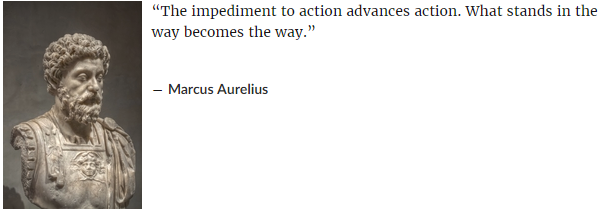
Modern day author Ryan Holiday’s recent study of the leadership qualities of Roman Emperor Marcus Aurelius entitled The Obstacle is the Way.

The dichotomy we are faced with today is having leaders who have a proven record of success versus having leaders who have experienced loss and failure. The people who win the awards, who are offered the contracts, and who are believed to be the most successful are often the ones chosen for more awards, better jobs, and promotions. Being good at “failing” isn’t something anyone wants to be good at. We all want to be good at being good. Life doesn’t always work that way though. The allure of success, beauty and intelligence is appealing, but I submit that there’s another way we should look at things.

“It ain’t about how hard you can hit, it’s about how hard you can get hit and keep moving forward.” Rocky Balboa

If Rocky Balboa were born in a two-parent home in a suburban neighborhood and was 6’4″ 235 lbs with an 82″ reach there would never have been any Rocky movies. This character is the epitome of the underdog and that’s what made these movies so popular for Americans and people around the world. We love the underdogs: Mr. Smith Goes to Washington, Seabiscuit, the 1980 U.S. Men’s Olympic Hockey Team, and the Bad News Bears are all iconic (and American) underdogs. Nobody ever “rooted” for the villanous opponents. We always cheered on the underdogs. Lincoln, like Balboa, wasn’t supposed to be the President of the United States nor was Balboa to become the World Heavyweight Champion. Neither Balboa nor Lincoln accepted the fact that some thought they were losers and so they became losers. They didn’t quit, they kept moving forward.

Though Abraham Lincoln is thought of as modest, and regularly made fun of himself through his self-deprecating sense of humor, he was extremely ambitious. He wanted to lead and though the failures were setbacks, he refused to let those setbacks define him. That’s why we like him so much.

So the lesson to those of us who have experienced loss, failure, and setbacks isn’t that we’re relegated to a second-rate life because of those experiences. In fact, the setbacks have made us better, stronger, faster. Lincoln’s tragic death is made even more tragic by the fact that less than a week before his death General U.S. Grant received the unconditional surrender from Robert E. Lee on April 9, 1865 at Appomattox Courthouse in Virginia. The victory had been won! What Lincoln would want his countrymen to learn from his example is to never give up and to keep moving forward – that’s how winning is done!

The Twelve Days of Lincoln

February 4

Lincoln’s Humor

Many pictures represent Mr. Lincoln as a sad man with a woeful spirit. Ironically, in spite of losing his mother at a young age, the heartaches of losing two sons, numerous business and election failures, the burden of being a wartime President, and the pressures of the office he was anything but woeful. Much has been made of Lincoln’s melancholy and the majority of the photographs of Lincoln depict a man who appeared depressed, rarely smiling. The fact is Lincoln WAS depressed! He had plenty about which to be depressed, but today we know much more about melancholy and depression than we did in the nineteenth century. There is no doubt that the Lincolns both battled their own inner demons of depression and despair.

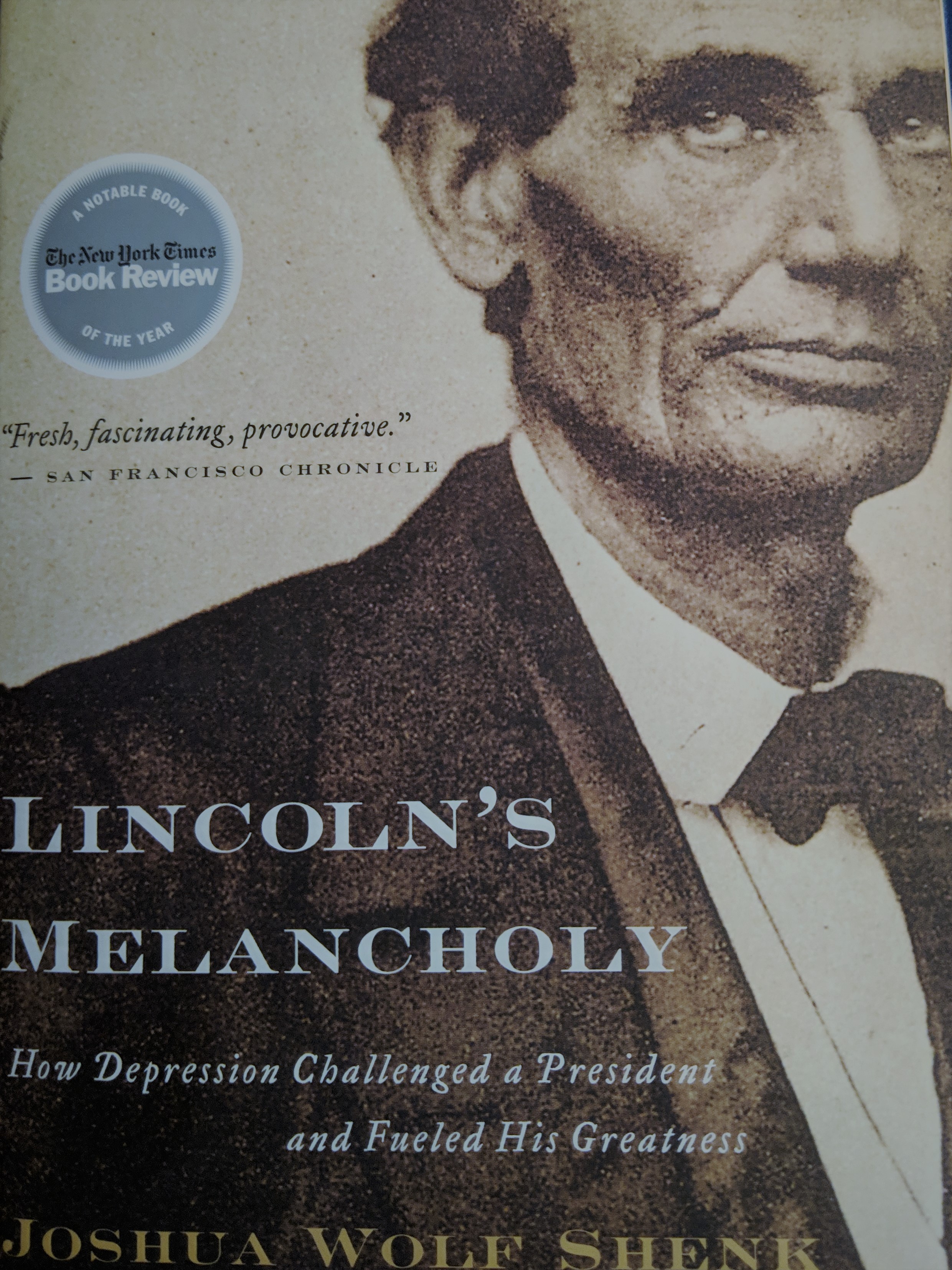
And though Lincoln faced a number of circumstances which may have caused his melancholy to flare up, “Lincoln’s Melancholy” by Joshua Shenk highlights the instances in which Lincoln used his depression to overcome challenging times and helped spur him on toward his leadership ambitions. Lincoln’s sense of humor, his ability to tell stories, his gift of mimicry and his excellent memory made Lincoln a naturally gifted storyteller and humorist. His quick-wittedness drew others to him, and his physical presence enabled him to command large audiences while telling his tales.

So what is the point of making note of Lincoln’s sense of humor as part of the Twelve Days of Lincoln? The point is few men (or women) ever faced the amount of challenges Lincoln faced as a leader and yet, through it all he retained his sense of humor and affability. Lincoln’s self-deprecating humor was appreciated by the citizens he led and those who looked to Lincoln for comfort. I suspect that Lincoln might not have been considered nearly as great a leader had he allowed his melancholy and sadness to prevail. Lincoln used his story-telling and sense of humor to help Americans rise above the overwhelmingly difficult times in which they lived.

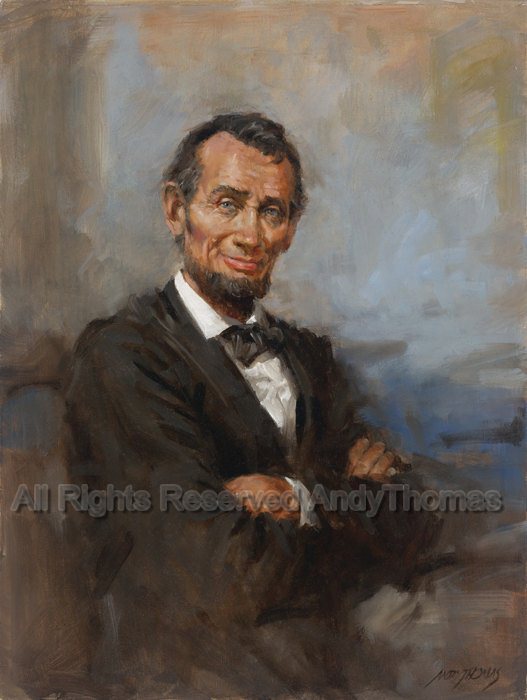
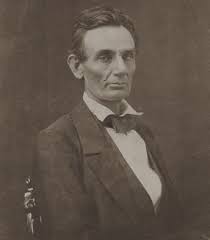
I’m thankful that members of the administrative team I led purchased the above print of Lincoln for me as a Christmas gift two years ago. Prior to receiving the gift I had never before seen a print or photo of Lincoln wearing this expression. I have placed the photo above the desk in my office. It is there to remind me when I am overcome by the seriousness of my work to relax – it’s going to be alright. President Lincoln’s expression carries a peaceful smile to help remind me to keep my sense of humor in difficult times also.

The Twelve Days of Lincoln

February 3

Father Abraham

As a father of two wonderful children, I know there are few roles I’ve ever played that more define who I am. I am proud to be the son to my parents, brother to my sister, and husband to my wife. I’ve also been proud to be teacher, coach, mentor, advisor, principal, and superintendent, but my favorite role to have ever played is to be “Dad.” I certainly hope that my parents, wife, and sister will understand, but it’s pretty awesome to be a Dad. You can fail at everything else you’ve ever done, but if your kids are successful and you had anything at all to do with it, then that may just be good enough.

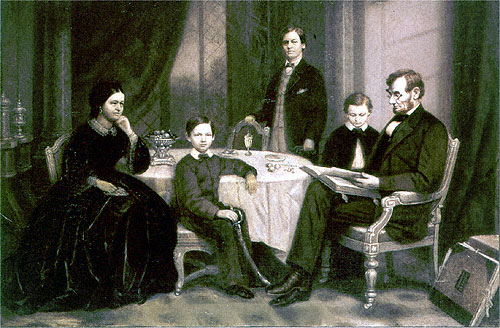
Given the difficulties that Lincoln endured throughout his lifetime, perhaps he too, most relished his role as Dad. As though Lincoln wasn’t experiencing enough stress in his role as Commander in Chief during the only war fought entirely on American soil with Americans fighting former Americans, it was during his time in office that he lost his second of his four sons ( Edward in 1850 and Willie in 1862). For most parents, the thought of ever losing one child is incomprehensible. To lose two, worse, and there is no word for that.

In Daniel Day Lewis’ portrayal of Lincoln (Spielberg, 2012) Joseph Gordon-Leavitt plays Robert Lincoln, the eldest son of Mary Todd and Abraham Lincoln. Robert desperately wants to make his mark by fighting in the Civil War, but repeatedly battles with his parents regarding his enlistment. By this point, the Lincolns have lost two of their four sons to tuberculosis, and the willfill Mary forbids her eldest son to enlist. Though Lincoln doesn’t want Robert to enlist, his bigger fear is having to deal with Mrs. Lincoln’s volatile temper should her husband acquiesce to the junior Lincoln’s desires.

Daniel Day-Lewis’s portrayal in this movie seems consistent with the recorded accounts of Lincoln’s character, and the manner in which Lincoln loved his sons. Though Robert challenged Lincoln’s authority, there doesn’t seem to be much doubt in any representation of Lincoln that he took his role as father quite seriously and delighted in his son’s and deeply mourned the losses of both Edward and Willie. Lincoln’s son Tad (Thomas) would pass in 1871 leaving only Robert surviving before Mary’s death in 1882 at the age of 63. Tragically, between the loss of two of his sons to disease, the struggles with his wife’s mental illness, and Robert’s independence, Lincoln was not afforded some of the many joys most of us Dad’s get to experience. In the many roles Lincoln played throughout his lifetime, few were more important to him than that of “father” and just as the fleeing peace had eluded him, so too did a long-lasting, happy relationship with his sons.

The Twelve Days of Lincoln

February 2

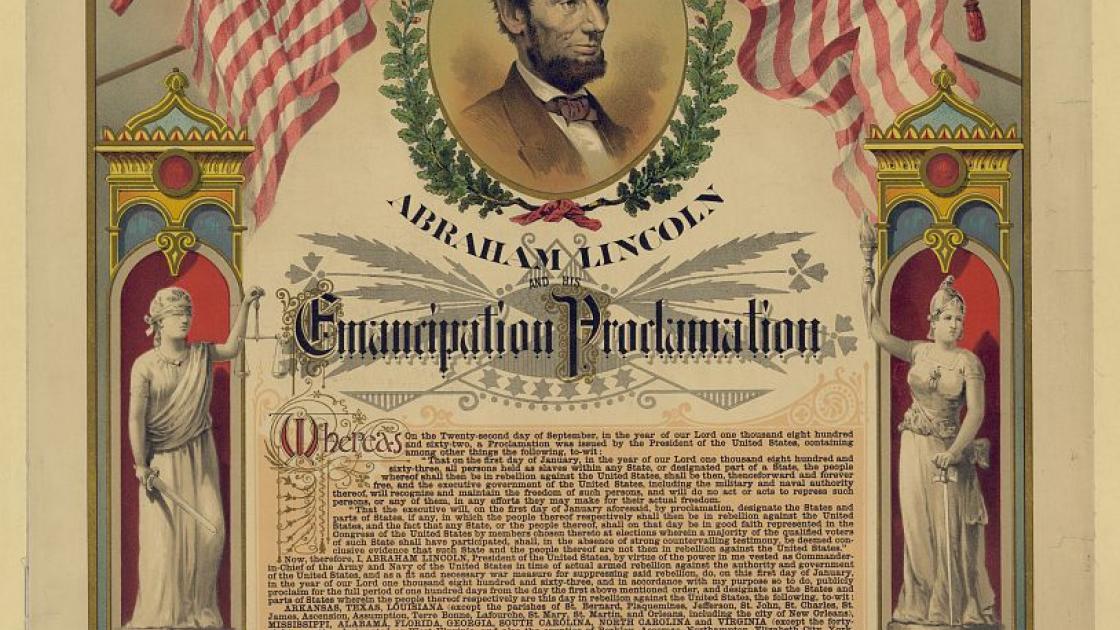
The Emancipation Proclamation


“I do order and declare that all persons held as Slaves within said designated states and parts of states are and henceforward shall be free.”

President Abraham Lincoln, September 22, 1863

Although the “12 Days of Lincoln” aren’t necessarily in order of importance, there is no doubt that Lincoln’s proclamation to free the slaves in the southern states is among the most important acts of his presidency and one of the most important documents in U.S. History. The proclamation was significant for a variety of reasons which include political, military, diplomatic, and morally important reasons.

Ironically the Emancipation Proclamation freed virtually no one. Since the south had seceded, and the proclamation only freed slaves in the states in rebellion its impact was actually pretty limited. But the statement that this act made was hugely important. By issuing the document Lincoln was establishing the fact that the slaves were freed even before a constitutional amendment prohibited slavery, it thwarted the efforts the south may have used to conscript slaves into the confederate army, and it sent a message to Great Britain and France, which combined with victorious battles during the mid to late summer of 1863 prevented those superpowers from entering the war on the side of the CSA. Even more importantly Lincoln was making a moral statement as the first President to issue a formal executive document prohibiting slavery regardless of its area of designation.

In today’s world, revisionist history has clouded our knowledge and understanding of the moral positions of many of our past leaders. Some former leaders are judged more harshly than others and I am often troubled by judgements made by contemporary persons of the lives of some of these leaders. It’s difficult to reduce an individual to simply”good” or “bad” based on some of what we know about these people without the benefit of having lived at the same time. It may not be totally fair to judge leaders such as Benjamin Franklin, George Washington, and Thomas Jefferson based on some of what has recently been revealed about some of their personal affairs. Likewise, it may also not be completely fair to judge some of our more modern leaders based on what we know about their personal lives as is the case with Franklin Roosevelt, John F. Kennedy, or Martin Luther King Jr. The fact is even these leaders, just like us, have failed at times and made a number of mistakes based on challenges they were facing at the time. Some have alleged that while Lincoln believed in the idea of freedom for the slaves, he was still a racist. Sometimes the lack of empirical evidence of these stories is regarded as truth even without proof. There is, however, ample evidence to prove that Lincoln’s beliefs were evolving throughout the war, and that he was deeply moved and changed by his experiences as a wartime President. Unfortunately after the unprecedented progress made by Lincoln in the 1860s there was very little activity by subsequent American Presidents to continue to advance the cause of Civil Rights throughout the next 100 years after the war’s end.

The Twelve Days of Lincoln

In honor of our greatest President’s 210th Birthday, February 12, 2019

“Upon the subject of education, not presuming to dictate any plan or system respecting it, I can only say that I view it as the most important subject which we as a people can be engaged in.

Abraham Lincoln, March 9, 1932

Lincoln the Educator

No one is probably surprised to see me lead the “Twelve Days of Lincoln” with a post about education. Obviously education and Lincoln are two of my favorite subjects. What is remarkable to me about Lincoln is how much he valued education even though he had such little formal schooling. Though Lincoln lacked formal schooling he did not lack in education. His education was vast from the school of hard knocks, to learning about loss and setbacks, to teaching himself to read and his voracious appetite for books and even more learning. We hear people use the phrase “lifelong learner” a lot these days. Lincoln is the poster child for lifelong learning and we as a nation are the better for it.

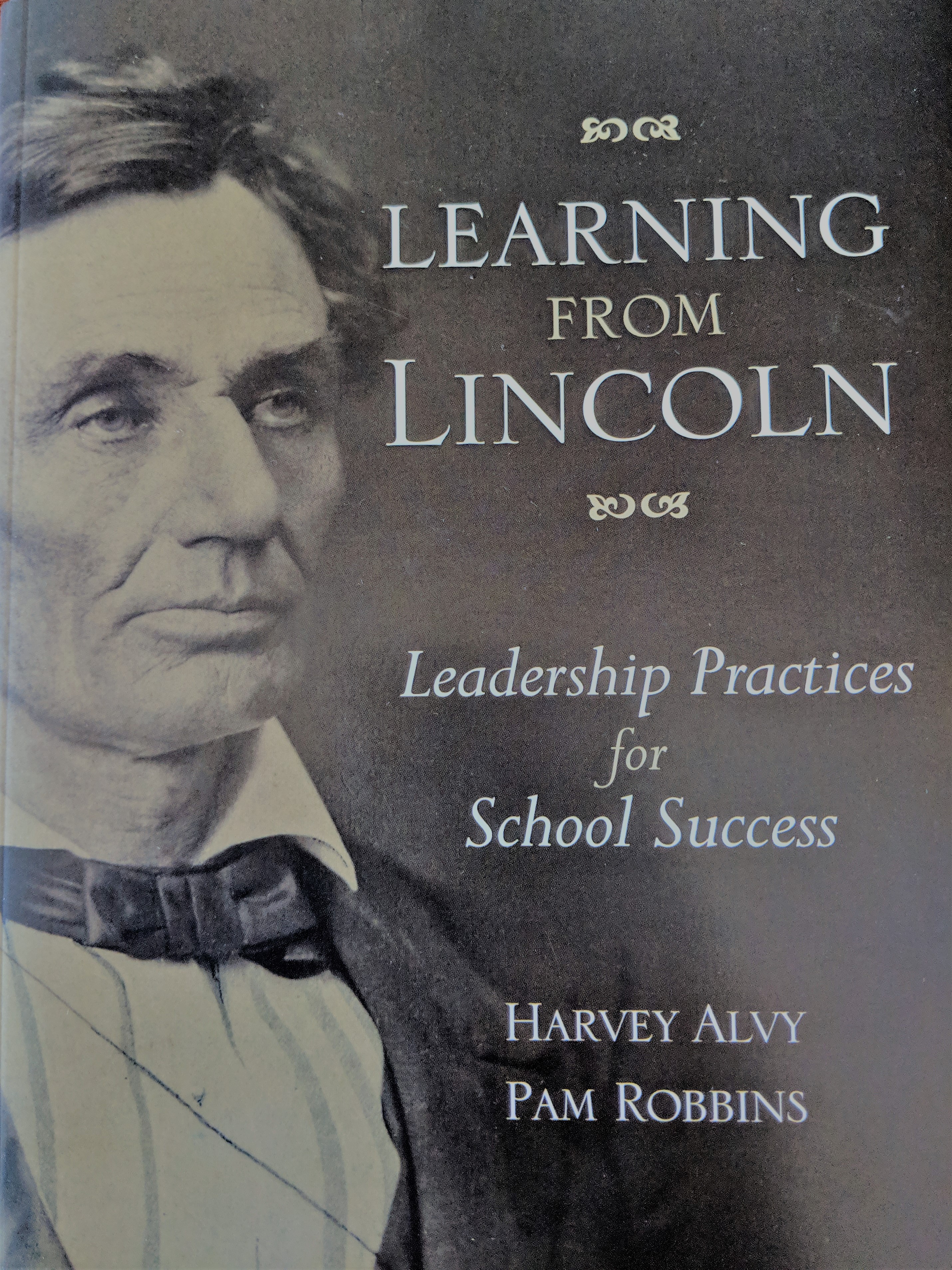
In my little library of books is a title “Learning from Lincoln: Leadership Practices for School Success” by Harvey Alvy and Pam Robbins. We read this as part of an administrative book study I was part of almost ten years ago. I highly recommend it for leaders regardless of your level of experience or for that matter whatever industry you may be in though it was published by ASCD.

At this point in my life I guess I’ve come to better appreciate the comeback stories and enjoy reading about “overcomers.” Lincoln was clearly an “overcomer” having battled many challenges and obstacles throughout his life, not just during his childhood. His tragic death at the hands of Booth is truly one of the saddest chapters in our American history. In chapter 7 of Alvy and Robbins’ book the authors speak of Lincoln’s “Dogged Tenacity” which is one of the qualities I admire so much about him. His ideas, his speeches, his beliefs, his eloquence are all very admirable traits, but his dogged tenacity in the face of adversity may be what endears some of us to him more than his other qualities.

The authors cite a quote from another Lincoln expert, Jay Winik (2001):

“Lincoln pressed on [despite the failure of several generals], weathering his own mistakes, and equally weathering the brittle highs and deepening lows of the war. If he can best be described during this perid, it is with two words: dogged tenacity. Dogged tenacity. It is a simple explanation for greatness. But, in Lincoln’s case, also probably quite true.”

What we admire about Lincoln the educator isn’t simply the fact that he read a lot of books and educated himself. Although that is admirable, and although he was extremely intelligent and hard working, we don’t typically hold people who are simply hard-working or simply intelligent in such high esteem. To me, what sets Lincoln above many others is the value he had for good education even though he didn’t necessarily have one. Because he had to make such personal sacrifices to survive, and because he wasn’t able to stay in school as a child, he wanted others to have the benefit of an education that he didn’t receive. He understood the importance of a good education not only to democracy, but to humanity. The ignorance of man and the hatred and prejudices of slavery stood juxtaposed to the beliefs of the educated and enlightened. It was necessary for education to not only be delivered to the masses, but valued so that mankind could end the “slights and degradations which had been cast by arrogant persons upon laborers, the poor, negroes, and the like.” Valuing education is something I think we can learn from Lincoln, the Educator.