February 8
:max_bytes(150000):strip_icc()/getty_lincoln_gettysburg-482796691-56af98c25f9b58b7d01ae634.jpg)
The Gettysburg Address
Of the many things I would do differently if I were still in the classroom today, one would have been to have spent more time teaching about The Gettysburg Address as a piece of historical literature. The curriculum I taught, or perhaps the lack thereof did not require me to do more to teach the Gettysburg Address. Sure I read it aloud or assigned it as reading. I am also quite sure that I couched the address in between dates and battles and the things that were taking place in November 1863. I may have even compared the happenings of that November with the fateful events of November 1963. But I don’t think I helped my students truly understand the magnanimity of this famous speech as I should, or would if ever given the chance to be in the classroom again.
What I’m not sure I did was teach my students about the beauty and eloquence of the speech, not simply the choice of words but of the thoughts, and purity of heart of our greatest leader. I’m not sure they were able to grasp the power of Lincoln’s words. I haven’t been in the classroom as a teacher in twenty years, but this would not be the only thing I would do differently. I don’t think twenty years ago any of us could have predicted the leadership crisis we are facing today. Many blame the current crisis on Watergate as though that was the first time any of our leaders took advantage of the trust of the American people. It’s pretty naive to think that Nixon was the first President to be a crook, after declaring he wasn’t one. Though I offer no sympathy to Richard Nixon, he wasn’t the first and we now know he was far from the last, and I’d venture a guess he wasn’t even close to the worst.
This isn’t said to imply anything about any of our recent presidents or the scandals they were part of during their tenure. Hardly any presidents were able to avoid a scandal or controversy during their years in office. If Lincoln himself were alive today even he would struggle to avoid the pitfalls of leadership our modern leaders experience.
In the election of 1864 Lincoln was only able to garner the support of 55% of those he led, while the other 45% of the votes went to a General Lincoln had repeatedly given the opportunity to serve as the Union Commanding General of the Army of the Potomac. Notwithstanding Lincoln’s leadership from 1861 until 1864, the Emancipation Proclamation, the sifnificant victories at Gettysburg and Vicksburg, and the delivery of the Gettysburg Address, Lincoln still only narrowly defeated a relatively unsuccessful leader and Democratic Party candidate in McClellan.
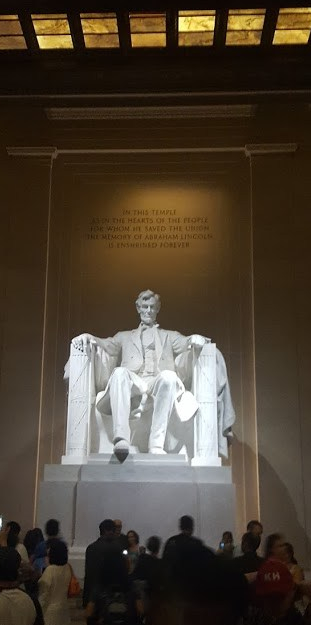
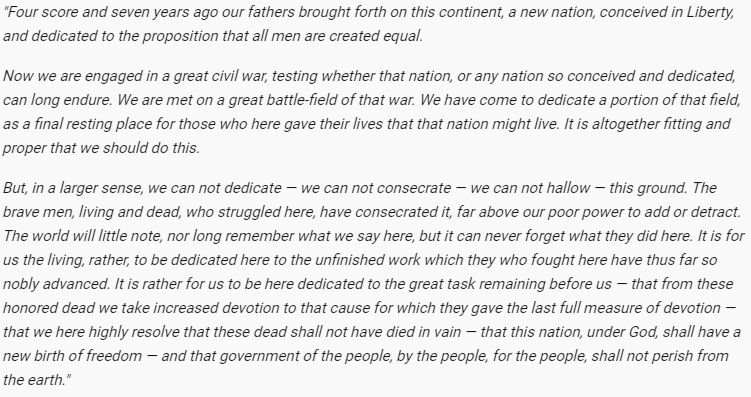
So back to the Gettysburg Address…
Once again in his brevity Lincoln was able to capture and emphasize the ideals of our nation in a manner unlike any American leader before or since. As a piece of literature there is much to be learned from Lincoln’s style which includes excellent syntax, phrasing, and word choice. How he was able to do so with such economy is amazing.
There were a variety of myths surrounding the speech which included Lincoln wrote the speech on the back of an envelope or while on the train ride from Washington to Gettysburg, neither of which were true. I found it interesting in this blog post that Lincoln did not consider himself a good impromptu speaker and as a result often turned down requests to speak publicly.
A fact we must face is that words DO matter. Perhaps many of us should more carefully select our choice of words in things we say or write. The impact of the words can be devastating to ourselves and to others. Likewise, our choice and use of words can greatly help our cause, whatever it may be. I wish we had leaders today who could say things in a way Lincoln could. Perhaps we might become kinder and gentler ( thanks Geo. H.W. Bush).

 Saxton's Educational Musings