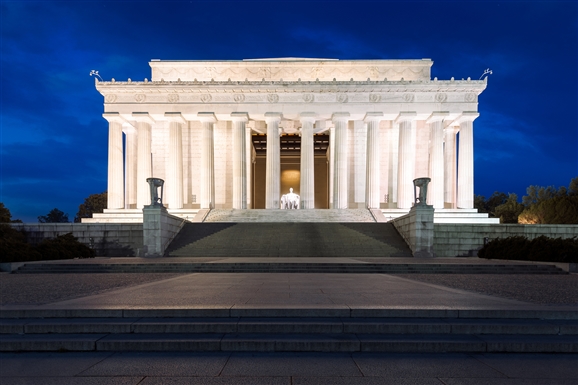
In honor of our greatest President’s 210th Birthday, February 12, 2019
“Upon the subject of education, not presuming to dictate any plan or system respecting it, I can only say that I view it as the most important subject which we as a people can be engaged in.
Abraham Lincoln, March 9, 1932
Lincoln the Educator
No one is probably surprised to see me lead the “Twelve Days of Lincoln” with a post about education. Obviously education and Lincoln are two of my favorite subjects. What is remarkable to me about Lincoln is how much he valued education even though he had such little formal schooling. Though Lincoln lacked formal schooling he did not lack in education. His education was vast from the school of hard knocks, to learning about loss and setbacks, to teaching himself to read and his voracious appetite for books and even more learning. We hear people use the phrase “lifelong learner” a lot these days. Lincoln is the poster child for lifelong learning and we as a nation are the better for it.
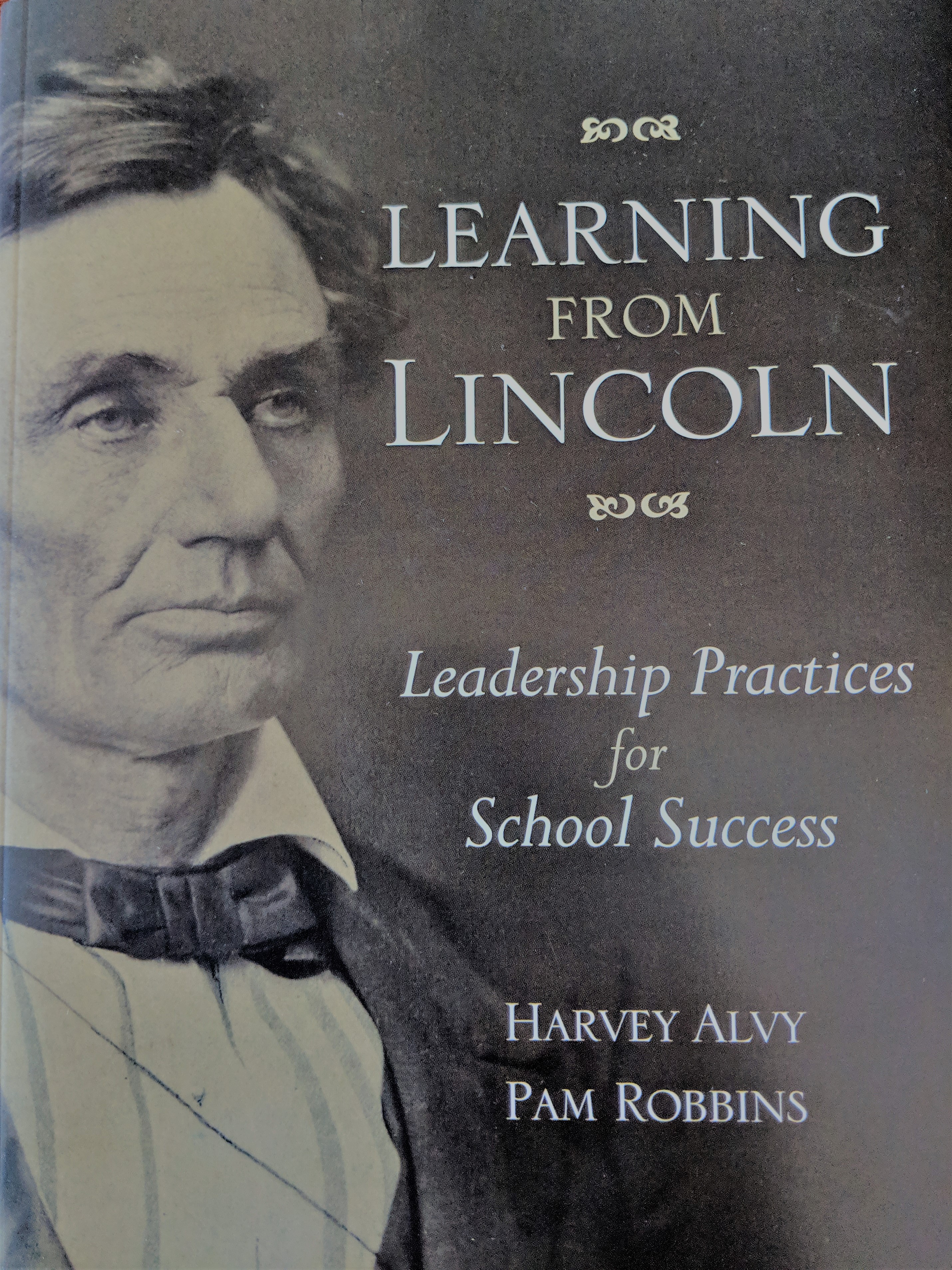
In my little library of books is a title “Learning from Lincoln: Leadership Practices for School Success” by Harvey Alvy and Pam Robbins. We read this as part of an administrative book study I was part of almost ten years ago. I highly recommend it for leaders regardless of your level of experience or for that matter whatever industry you may be in though it was published by ASCD.
At this point in my life I guess I’ve come to better appreciate the comeback stories and enjoy reading about “overcomers.” Lincoln was clearly an “overcomer” having battled many challenges and obstacles throughout his life, not just during his childhood. His tragic death at the hands of Booth is truly one of the saddest chapters in our American history. In chapter 7 of Alvy and Robbins’ book the authors speak of Lincoln’s “Dogged Tenacity” which is one of the qualities I admire so much about him. His ideas, his speeches, his beliefs, his eloquence are all very admirable traits, but his dogged tenacity in the face of adversity may be what endears some of us to him more than his other qualities.
The authors cite a quote from another Lincoln expert, Jay Winik (2001):
“Lincoln pressed on [despite the failure of several generals], weathering his own mistakes, and equally weathering the brittle highs and deepening lows of the war. If he can best be described during this perid, it is with two words: dogged tenacity. Dogged tenacity. It is a simple explanation for greatness. But, in Lincoln’s case, also probably quite true.”
What we admire about Lincoln the educator isn’t simply the fact that he read a lot of books and educated himself. Although that is admirable, and although he was extremely intelligent and hard working, we don’t typically hold people who are simply hard-working or simply intelligent in such high esteem. To me, what sets Lincoln above many others is the value he had for good education even though he didn’t necessarily have one. Because he had to make such personal sacrifices to survive, and because he wasn’t able to stay in school as a child, he wanted others to have the benefit of an education that he didn’t receive. He understood the importance of a good education not only to democracy, but to humanity. The ignorance of man and the hatred and prejudices of slavery stood juxtaposed to the beliefs of the educated and enlightened. It was necessary for education to not only be delivered to the masses, but valued so that mankind could end the “slights and degradations which had been cast by arrogant persons upon laborers, the poor, negroes, and the like.” Valuing education is something I think we can learn from Lincoln, the Educator.

 Saxton's Educational Musings